What Are the Most Effective Training Templates for Time-Crunched Clients?
If you are a trainer in New York City like me, you know the hardest clients are not the athletes. The hardest ones are the people who want results but barely have time to train. Parents juggling kids. Lawyers with twelve-hour days. Professionals who think a workout means missing out on sleep or rushing through lunch.
Here is the truth. You do not need two hours in the gym to get results. With the right template, you can help a client get stronger, fitter, and leaner in thirty to forty minutes. The key is structure and focus.
Let me break down the training templates I use most often with busy clients and why they work.
What is the best workout split for busy professionals?
When someone only has three days a week to train, a full body split is the best option. Upper and lower splits can work, but if the client misses a session, half the body gets neglected. With full body sessions you hit every major movement pattern in each workout.
Here is a simple template I use inside The Training Notebook:
Warmup: 5 minutes of mobility and activation
Main lift: one compound exercise such as squat, deadlift, or bench
Accessory lift: one single leg or unilateral pull
Push movement: overhead press or push up variation
Pull movement: row or pull up
Core: anti-rotation or stability exercise
Finisher: optional interval conditioning if time allows
That is six to seven movements. Done with intent, it fits in thirty to forty minutes.
How do you train a client who only has two days a week?
If a client can only train twice a week, I program two contrasting sessions.
Day 1: Strength focused. Big compound lifts, low to moderate reps, full rest.
Day 2: Conditioning focused. Circuits, supersets, higher reps, limited rest.
This keeps variety high and covers both ends of the spectrum. Even two days a week can move the needle when tracked and progressed.
What if a client only has twenty minutes?
I have had clients who could not give me more than twenty minutes. For them, density is king.
One of my go-to templates is an EMOM (every minute on the minute). For example:
Minute 1: 10 goblet squats
Minute 2: 10 push ups
Minute 3: 12 kettlebell swings
Minute 4: 8 rows per arm
Repeat for five rounds
That is twenty minutes. Full body, heart rate up, strength maintained. No wasted time.
What about parents training at home with no equipment?
Not every client has a gym membership. Parents often train at home between naps and school runs. The bodyweight circuit is the template here.
Here is one I program often:
Squat to chair x 15
Incline push up on counter x 12
Glute bridge x 15
Bird dog x 10 per side
Plank hold 30 seconds
Run that circuit three to five times. No equipment, no excuses, and it hits all the basics.
How do you make sure short workouts still deliver results?
The secret is progression. A twenty minute workout will only take a client so far unless you progress it. That means adding load, adding reps, tightening rest, or advancing the movement pattern.
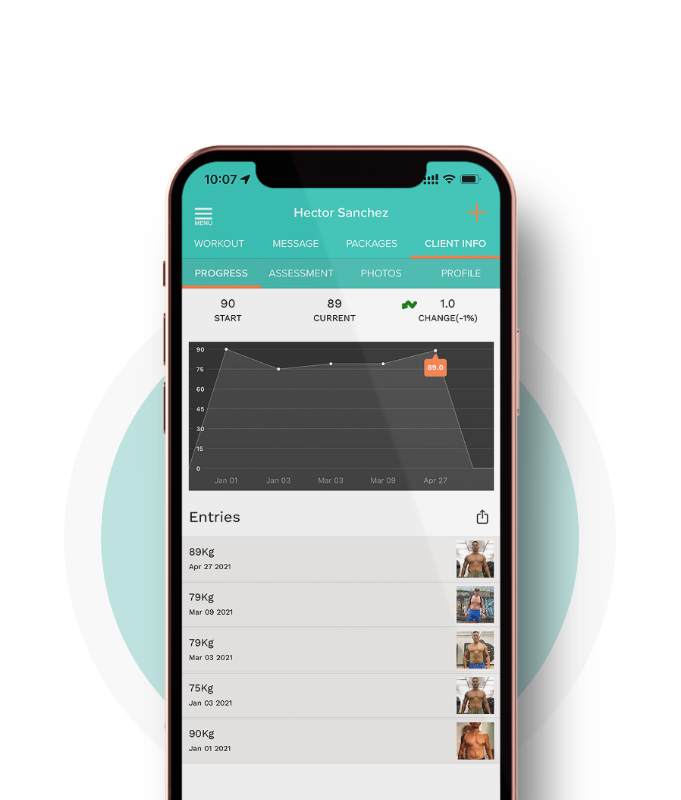
Inside The Training Notebook I track every session so we know when it is time to move up. Even if the session is short, we treat it like a serious training appointment, not just exercise to sweat.
Case Study: The Corporate Lawyer
One of my clients, a corporate lawyer, had no more than three thirty minute windows a week. We ran a full body template with one main lift per session and paired accessory work.
Workout A: Deadlift, push up, split squat, row, plank
Workout B: Squat, overhead press, single leg RDL, chin up, anti-rotation press
Workout C: Bench press, lunge, kettlebell swing, inverted row, side plank
He tracked his lifts inside TTN and within six months his deadlift went up 75 pounds, his waist dropped two inches, and he said his energy in the office was better than it had been in years.
Case Study: The Busy Parent
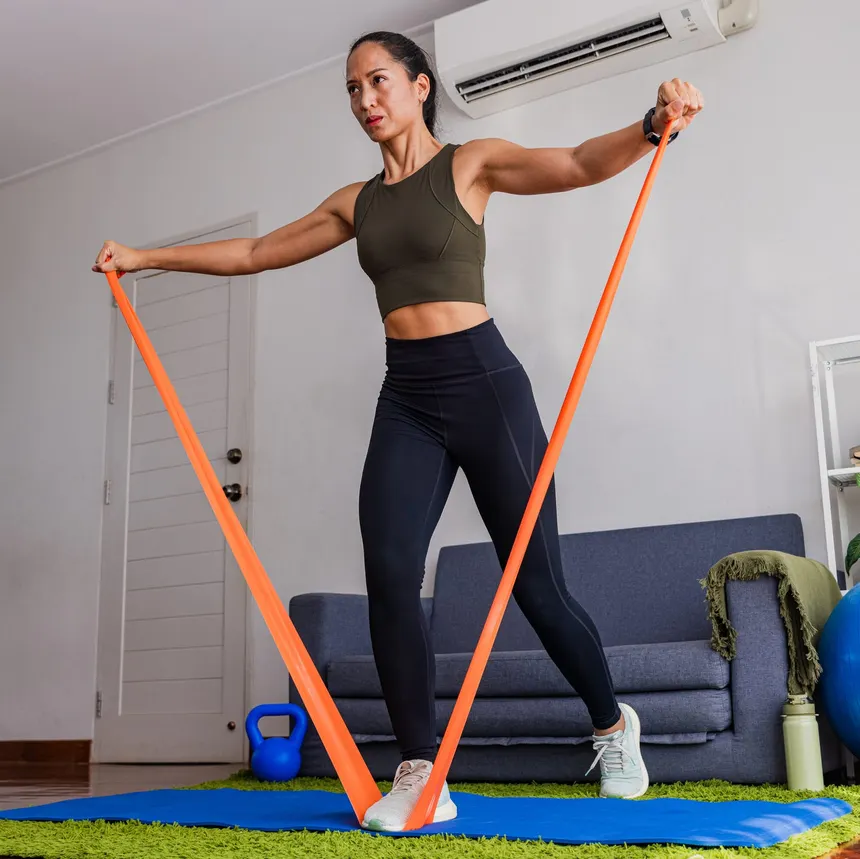
Another client was a mom of three. She trained at home while the kids played. No gym, no fancy gear. We used a twenty minute EMOM template with just a set of resistance bands.
Minute 1: Squat with band
Minute 2: Push up with band
Minute 3: Band row
Minute 4: Glute bridge with band
She repeated this five times. Four days a week. Simple but effective. Over twelve weeks her back pain eased, her clothes fit better, and she had more energy for her kids.
What is the takeaway for trainers?
Time is the number one excuse. But it is also the number one opportunity. When you design training templates that fit a client’s lifestyle, they stick with you. You do not need endless variety. You need a system that balances strength, mobility, and conditioning in the shortest window possible.
Full body sessions are king for three days a week. Strength and conditioning split works for two days. EMOMs and circuits work when you have twenty minutes or less. Bodyweight templates work for parents training at home.
Track it all. Progress it. Respect the client’s schedule.
Final Word
Busy professionals and parents do not have time to waste. As trainers, it is our job to cut the fluff and focus on what delivers. When you use smart templates and keep clients consistent, they see results. And once they see results, they stay.
I built The Training Notebook to keep these programs organized and to give clients a clear roadmap. Whether they train in a gym, in their living room, or between meetings, the right plan makes fitness possible.
That is how you turn “too busy” into “making progress.”